• Welcome to ClassicBroncos! - You are currently viewing the forums as a GUEST. To take advantage of all the site features, please take a moment to register. It's fast, simple and absolutely free. So please join our community today!
    If you have problems registering or can't log into your account, please contact Admin.

The “Bronco Breakdown” Information thread!

JGbronc

Contributor
Bronco Maniac
Joined
Mar 30, 2007
Messages
6,387
Loc.
Hytop, Alabama
I’ve been doing these write ups on Facebook for a few years. I decided it’s time to transfer them on here for others to see, and to have a backup in case I decide to delete the group these are in. Maybe this can be helpful to some of you!

***All text not quoted from another is my own***


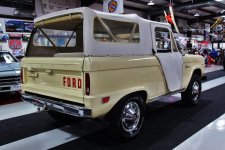
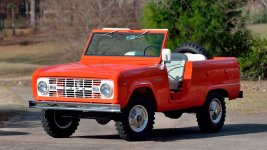
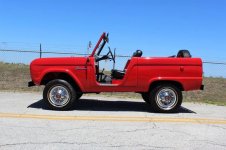
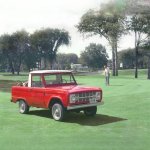
First up is the rare and sought after U13 Roadster!

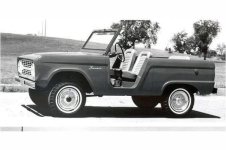
The Roadster was only produced for 3 years, 66, 67, and 68. There were a total of 5,000 built during these three model years.

1966: 4,090
1967: 698
1968: 212

These Broncos were not offered with a hard top and often didn’t have many options, so they didn’t sell very well. They were known to sit on the lot for sale for months, sometimes even more than a year. Therefore Ford discontinued the Roadster after the 68 model year.

You’ll see people say that a Roadster is a “No top no doors” Bronco because many had fiberglass door inserts, but this isn’t necessarily true for a couple reasons.

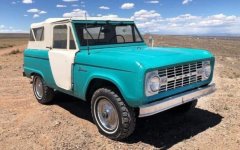
1- Soft top and soft doors were manufactured by Whitco (short for White Company) and were sold and installed at Ford dealerships, even when new if desired. See first two pics below for examples of original Whitco equipment. They went as far as making small gutter extensions to screw in below the windshield frame to keep rain from coming inside the soft doors.

2. Full hard doors were an option, and several were equipped this way. In fact, 519 of the 698 67 Roadsters had full hard doors. These were usually listed as “Glassed and Framed Doors” on an order form.

There is a large misconception out there that there are only 150-250 known to exist. Thanks to the hard work of Bobby Tennell, we know there are for sure around 720-730 66s alone. Estimations for 67 and 68 are around 60-70 currently known.

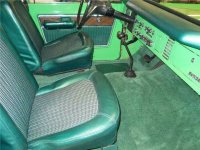
The only trim package ever offered with these besides the bright appearance package (chrome bumpers, horn button with ring, taillight surrounds etc.), was the Pony Interior package. As of now, only 2 of these are known to exist.

The majority of the 66 Roadsters were 170 equipped as the 289 wasn’t available until March of 66, and production had reduced by then. Since no records exist for 66, there are no numbers available.

There were 199 67 V8 Roadsters, 328 had an Export low compression 170, and 171 had the standard 170. Extra tidbit, 333 had a metric speedometer (KM).

There were 136 68 V8 Roadsters, 74 had the standard 170, and although neither have surfaced it is believed there were 2 equipped with a low compression engine.
 

Attachments
  • IMG_9731.jpeg
    IMG_9731.jpeg
    80.2 KB · Views: 115
  • IMG_9732.jpeg
    IMG_9732.jpeg
    134.6 KB · Views: 132
  • IMG_9733.jpeg
    IMG_9733.jpeg
    14.9 KB · Views: 135
  • IMG_9734.jpeg
    IMG_9734.jpeg
    172.5 KB · Views: 137
  • IMG_9736.jpeg
    IMG_9736.jpeg
    123.8 KB · Views: 146
  • IMG_9737.jpeg
    IMG_9737.jpeg
    105.3 KB · Views: 140
Last edited:
OP
OP
JGbronc

JGbronc

Contributor
Bronco Maniac
Joined
Mar 30, 2007
Messages
6,387
Loc.
Hytop, Alabama
#broncobreakdown
The Ranger Package!

The Ranger package is a highly desirable trim package since it’s in some eyes the “top of the line”.

The first year for the package is 1973….sort of! There are some Broncos registered as 72s that are Rangers, but they are actually 73s that were intentionally titled as the previous year. These even had unique interior codes to prevent them from being linked to the Ranger package. Long story for a different write up!

These Broncos had all the bright work of the Sport package including the Argent grille, window molding, side marker and taillight surrounds, and chrome bumpers. The famous stripes that many people love were Ranger only, but could be deleted if desired. Often when deleted it was replaced with bright rocker panel molding. Mid-late 73 and newer also featured a Bronco Ranger spare tire cover as well.

The Ranger was the only package to offer carpeted flooring. The seats were color keyed vinyl with houndstooth fabric insets. Door panels were wood grain upper and houndstooth lower. The rear quarters had panels covering them that matched the seats and door panels. Most of these had a color keyed dash pad as well, although it seems some of the early 73s and ones registered as 72s had black. The dashes were painted body color.

The first Rangers had no glovebox emblem, but the chrome one was introduced mid 73 and was used until 77. 77 had the black/silver plastic one used on full size trucks.

There were several interior color choices to go along with most all paint colors. The interior colors were as follows:

1973- Avocado, Ginger, Blue
1974- Avocado, Ginger, Blue
1975- Olive, Ginger, Blue
1976- Olive, Tan, Blue
1977- Jade, Tan, Blue
 

Attachments

  • IMG_9738.jpeg
    IMG_9738.jpeg
    83.6 KB · Views: 161
  • IMG_9739.jpeg
    IMG_9739.jpeg
    115.1 KB · Views: 153
  • IMG_9740.jpeg
    IMG_9740.jpeg
    101.3 KB · Views: 146
  • IMG_9741.jpeg
    IMG_9741.jpeg
    214 KB · Views: 148
  • IMG_9742.jpeg
    IMG_9742.jpeg
    100.1 KB · Views: 134
OP
OP
JGbronc

JGbronc

Contributor
Bronco Maniac
Joined
Mar 30, 2007
Messages
6,387
Loc.
Hytop, Alabama
#broncobreakdown
The Sport Package!

The Sport package was introduced for 67, and with it were some different features that remained on all Sports.

-Bright window molding
-Bright door window frame molding
-Bright bezels around taillights and side marker lights (if equipped)
-Stainless vent window frames
-Mylar/Parchment door panels (Mylar is the chrome look at the top)
-Parchment Vinyl full length floor mat
-Argent (silver) grill center with bright center surround
-Raised chrome grill letters
-Chrome headlight rings
-Bronco Sport fender emblems

There were also some Sport features that were limited years, or one year only.

-Bright trim on top and bottom of dash, 67 only.
-Bright trim on sides of seats, 67 only.
-Bright trim on the hard top drip rail, 67-71 only. On both U14 and U15.

Keep in mind, the Sport package wasn’t offered for a U13. One thing to make note of, the body side moldings, often called “belt-line trim” wasn’t a Sport only feature. It was optional on all models except the U13. Same with the rocker molding except a U13 could have that.
 

Attachments

  • IMG_9743.jpeg
    IMG_9743.jpeg
    24.1 KB · Views: 127
  • IMG_9746.jpeg
    IMG_9746.jpeg
    142 KB · Views: 120
  • IMG_9745.jpeg
    IMG_9745.jpeg
    146.1 KB · Views: 145
  • IMG_9744.jpeg
    IMG_9744.jpeg
    61.8 KB · Views: 128
Last edited:
OP
OP
JGbronc

JGbronc

Contributor
Bronco Maniac
Joined
Mar 30, 2007
Messages
6,387
Loc.
Hytop, Alabama
#broncobreakdown
Explorer Package and Explorer Stripes! Let’s discuss this for a minute…

I’ve had numerous messages recently asking about Explorer package tech. And sadly thanks to a couple old articles, there’s a lot of false/confusing info out there so I decided it was time to address some of this.

Here are the basics:

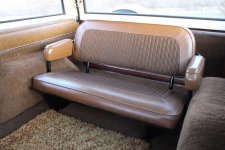
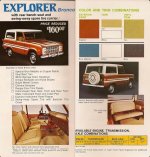
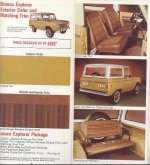
The Explorer package was first offered for the 72 model year, and could only be paired with the Sport package. These had all the bright work of the Sport package, plus Ginger “Random Stripe” cloth seats, Ginger/Mylar door panels, and a Ginger vinyl floor mat. The dashes were painted Light Parchment like the standard Sport and base model. The standard colors for 72 were Durango Tan (also known as Light Goldenrod) and Hot Ginger. Other colors were available by order and numerous others have surfaced.

For 73 the Explorer package was offered by itself, and the only bright work included were chrome bumpers. No light bezels, window trim, or Argent painted grill. The dash was painted body color on the Explorer from here on. The interior was offered in Blue or Orange “Random Stripe” seats, Blue or Orange vinyl floor mat, and Blue or Orange with wood grain door panels. The standard colors were Grabber Blue and Burnt Orange, and other colors were available by order.

74 was a change up in colors and interior, but same basic concept. Chrome bumpers but no other bright work. The interior was either Red or Blue “Stirling” (commonly called Plaid), Red or Blue vinyl floor mat, and Red or Blue with wood grain door panels. The standard colors were Viking Red and Brook Blue Metallic, as always other colors available by order.

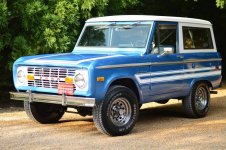
76 was the next and final year of the Explorer package, as 75 was skipped. 76 indroduced the most commonly misunderstood part of the Explorer package. Stripes! This was the ONLY year of the Explorer stripes like pictured on the blue 76 below and these were the ONLY Explorer stripes ever offered. They were available in white and tan only. The concept changed a bit, as the seats were now either solid blue vinyl or tan vinyl, the door panels were either blue or tan with wood grain, and the vinyl floor mat was blue or tan. The standard 76 colors were Blue Metallic or Copper, and like the other years different choices were available by order.

Hopefully this will help set the record straight in the future, as I know there has been some confusion.

*Special thank you to my friend Robby Firestone for allowing me to use the pics of his beautifully restored Blue Metallic 76 Explorer! This is how they should look!
 

Attachments

  • IMG_9747.jpeg
    IMG_9747.jpeg
    198.9 KB · Views: 169
  • IMG_9748.jpeg
    IMG_9748.jpeg
    161.3 KB · Views: 148
  • IMG_9749.jpeg
    IMG_9749.jpeg
    174.7 KB · Views: 157
  • IMG_9750.jpeg
    IMG_9750.jpeg
    140.9 KB · Views: 172
  • IMG_9751.jpeg
    IMG_9751.jpeg
    120 KB · Views: 174
  • IMG_9752.jpeg
    IMG_9752.jpeg
    149.1 KB · Views: 172
  • IMG_9753.jpeg
    IMG_9753.jpeg
    101.1 KB · Views: 171
OP
OP
JGbronc

JGbronc

Contributor
Bronco Maniac
Joined
Mar 30, 2007
Messages
6,387
Loc.
Hytop, Alabama
#broncobreakdown

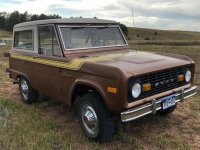
Special Decor Group!

The Special Decor package was only offered for 76 and 77, with the most noticeable feature being the stripe across the hood and body sides. The stripe was offered in three colors. White, Black, and Yellow with Yellow being the most rare. The stripe was required to not blend with the body paint (for example no white stripe with white body, no black on black)

These Broncos came standard with a matte black grill center and headlight rings with core support painted black as well, chrome raised grill letters, bright window trim, and monotone (solid color) paint scheme although the Wimbledon White roof was an option as you can see in the pics below.

The Sport package could also be paired with the SD for upgraded door panels, parchment floor mat, and the bright trim for the grill center.
 

Attachments

  • IMG_9754.jpeg
    IMG_9754.jpeg
    115.9 KB · Views: 120
  • IMG_9755.jpeg
    IMG_9755.jpeg
    184 KB · Views: 123
  • IMG_9756.jpeg
    IMG_9756.jpeg
    296.1 KB · Views: 105
  • IMG_9757.jpeg
    IMG_9757.jpeg
    56.7 KB · Views: 138
OP
OP
JGbronc

JGbronc

Contributor
Bronco Maniac
Joined
Mar 30, 2007
Messages
6,387
Loc.
Hytop, Alabama
#broncobreakdown

Denver Broncos Special Edition!

The Denver, often confused with the Stroppe Baja, was produced only in the 1975 model year. According to Ford records there were 214 of these produced.

It was a long time rumor that these were built intended for Stroppe and never made it there. However some if not all of these Broncos were built prior to the last 75 Bajas, so these Broncos were built intended to be Denver Broncos Special Editions.

That being said, these were painted in a similar red, white, blue scheme but without the black hood. Also on the Denver, the wheels were typically painted blue and didn’t usually come with hubcaps, at least as far as I’ve found in my research but exceptions are almost always an option on the Early Bronco. They were offered as Base, Sport, and Ranger packages, with the Ranger having the option for the Ranger stripes and included Blue or Ginger Ranger interior. These also had a unique Denver Bronco tire cover.

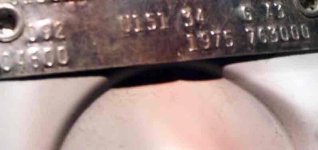
These Broncos all had a Denver DSO (sales area code) with special order number 3000, so all had 763000 stamped in the warranty plate that’s attached to the glovebox door.
 

Attachments

  • IMG_9758.jpeg
    IMG_9758.jpeg
    113.7 KB · Views: 132
  • IMG_9759.jpeg
    IMG_9759.jpeg
    84 KB · Views: 137
  • IMG_9760.jpeg
    IMG_9760.jpeg
    69.5 KB · Views: 121
  • IMG_9761.jpeg
    IMG_9761.jpeg
    106.4 KB · Views: 109
  • IMG_9762.jpeg
    IMG_9762.jpeg
    95.5 KB · Views: 124
  • IMG_9763.jpeg
    IMG_9763.jpeg
    28.7 KB · Views: 137
OP
OP
JGbronc

JGbronc

Contributor
Bronco Maniac
Joined
Mar 30, 2007
Messages
6,387
Loc.
Hytop, Alabama
#broncobreakdown

Balloon Chase Broncos!

Among the most rare and unique Early Broncos are the “Balloon Chasers”!

You may be wondering why they are called that, and the answer is simple! Chasing a balloon! Much of this information was gathered from a previous write up by Bronco expert Andrew Norton in issue #10 of Bronco Driver Magazine, so special thank you to Andrew for all the research! This will be just the Cliff Notes version with some updates since the 2004 write up.

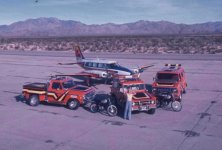
In late 1976 advertising executives at Ford had the idea to have a promotional cross country balloon trip called “The Limited Edition Sail” to promote the 1977 Ford vehicles. The idea was to fly the balloon (made to look like the “Better Idea” light bulb) across the US and have Ford vehicles involved in the chase.

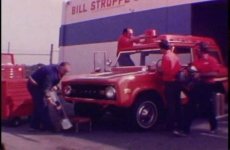
So who did Ford hire to be involved with the chase and vehicles? Bill Stroppe!

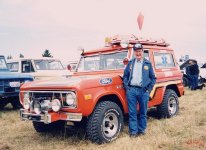
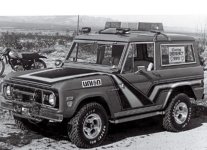
There were to be two Broncos, some pickups, and at least two Econoline vans used on the chase. These vehicles were modified by Recreational Vans Inc. and all were orange with super neat looking stripes. Obviously there were some Stroppe modifications as well! One Bronco was equipped as an ambulance with all sorts of medical gear, the other was equipped for high speed chasing.

The chase was successful even though there were some difficult moments including the balloon flying off track into Mexico, and Ford got press and media coverage for the event. The vehicles went to various places. The ambulance was kept by Stroppe and used in his fleet for a while, then was sold to James Duff in 1998. James kept it as is for many years, and sold it to the Peroni’s in or about 2011.

The second Bronco, nicknamed “Gopher” during the chase, doesn’t have quite the clear lineage. It was missing for many years, but we believe it is found currently.

After the chase, RVI was involved with making some Balloon Chase tribute Broncos. This wasn’t widely known in earlier times, so when the folks at KbarS found a 77 with the Balloon Chase paint scheme, it was initially believed that this was the other chase Bronco. However the production date of this Bronco was after the chase had already ended.

The same thing occured when West Coast Broncos purchased one with the paint scheme and RVI badges. This Bronco later went to Rocky Roads and was painted blue leaving no history behind.

However around 2007, a Bronco with the paint scheme appeared on Bronco Graveyard’s site. Some of us followed its status, and Andrew was eventually able to learn more of it. As it turns out it likely is the other Bronco used on the chase, with it having the right production date and marks/holes from equipment it had during the chase. It’s now owned by Andrew and will likely see its former glory in the near future..

So you may be wondering how many are out there. As of now, we know of 6. The Ambulance, “Gopher”, the former KbarS Bronco now owned by Jim Creel of Wild Horses, the one transformed by Rocky Roads, one privately owned in SoCal with what appears to be original paint, and one privately owned in Arizona that’s been changed up a bit but still resembles a Chaser.
 

Attachments

  • IMG_9772.jpeg
    IMG_9772.jpeg
    209.3 KB · Views: 154
  • IMG_9771.jpeg
    IMG_9771.jpeg
    292.4 KB · Views: 165
  • IMG_9770.jpeg
    IMG_9770.jpeg
    214.7 KB · Views: 169
  • IMG_9768.jpeg
    IMG_9768.jpeg
    127 KB · Views: 157
  • IMG_9769.jpeg
    IMG_9769.jpeg
    83.4 KB · Views: 165
  • IMG_9767.jpeg
    IMG_9767.jpeg
    206.7 KB · Views: 145
  • IMG_9766.jpeg
    IMG_9766.jpeg
    126.8 KB · Views: 149
  • IMG_9765.jpeg
    IMG_9765.jpeg
    169.7 KB · Views: 129
  • IMG_9764.jpeg
    IMG_9764.jpeg
    169.4 KB · Views: 168
Last edited:
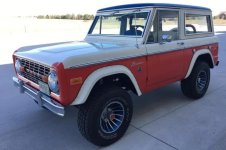
OP
OP
JGbronc

JGbronc

Contributor
Bronco Maniac
Joined
Mar 30, 2007
Messages
6,387
Loc.
Hytop, Alabama
#broncobreakdown

The “Budd Body” theory that now needs to die!

So we’ve all seen it, and most of us including me believed it. 66 “Budd Body” Bronco. It was alleged that the Budd company built the early 66 bodies and that is why there were so many unique differences. This made sense to most of us, and some took it to the extreme by using this to hype up ads for their Broncos or throwing the term around like it was a Shelby GT500. Well new information has surfaced to confirm this isn’t the case. I myself have unknowingly shared misinformation about this.

It all started at a Carlisle show when one of our well known vendors ran into some folks who worked for the Budd Company. He, like the rest of us, always believed the theory. They however explained that Budd was behind building body panels for ALL the 66-77 Broncos on behalf of FoMoCo. He even asked about subtle changes such as the eyebrow grill and they basically said it was as simple as a tooling change.

I along with others was skeptical of this. Why would the things we always believed suddenly not be true? Were these guys involved with the company enough to truly know?

Fast forward a year or two, our very own Todd Zuercher does some research that seems to confirm what the Budd guys said. I’ll quote what he said:

“I asked some questions of the Ford Archives re: the Budd bodies and got this response:

Hi Todd,

Here's what I was able to find.

In October 1963, Budd Company provides engineering design services on proposed 1966 Bronco of body-in-white, seats, trim, and body electrical along with the majority of the body sheet metal components. (Edit - this is known info for Bronco historians. TZ).

In 1974, there is discussion around cost of sourcing sheet metal from Budd Company versus Ford’s Metal Stamping Division but it appears to be a hefty cost savings to continue to source from Budd. The record does not explicitly state that this is for Bronco panels but as a supplier to Ford overall.

As late as April of 1979 Budd Company is still listed as supplying sheet metal panels for Bronco, SuperCab, and Medium Trucks. However there were plans to reduce the amount of panels being supplied by Budd for the 1980 models.

Beyond 1979 I can't find mention of Budd providing specifically Bronco panels.

Hope this helps!
____________________________

Her answer doesn't explicitly state or give information that Budd produced the body panels for the 66-77 trucks. However, I infer from her 1974 statement that Bronco panels were likely included in the sourced panels from Budd, particularly since they were "still listed as supplying sheet metal panels for Bronco, SuperCab and Medium Trucks" in 1979.

I think it aligns with what the ex-Budd employees have told Nick.

Todd Z.”

So there you have it. Not only was it way overhyped since most 66s were built before December, it wasn’t a true theory all along.
 

Attachments

  • IMG_9773.jpeg
    IMG_9773.jpeg
    52.3 KB · Views: 126
  • IMG_9774.jpeg
    IMG_9774.jpeg
    97.8 KB · Views: 106
  • IMG_9775.jpeg
    IMG_9775.jpeg
    76.6 KB · Views: 106
OP
OP
JGbronc

JGbronc

Contributor
Bronco Maniac
Joined
Mar 30, 2007
Messages
6,387
Loc.
Hytop, Alabama
#broncobreakdown
Engines and the associated codes.

Going to list all the engines that were available from 66-77, and the codes designating them. For those who don’t know, the fourth character of the VIN is the engine code.

Only discussing the type engine itself at the moment. Basically just listing what the code implies. Air cleaners, carbs, and other things will be discussed later.

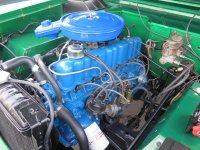
Code F- 170 CI Inline Six. These were used from 66-72. From August of 65 until March of 66, this was the only engine available.

Code N- 289 CI V8. This engine became available in March of 66 and was used until the end of the 68 model year. This was an optional upgrade over the 170.

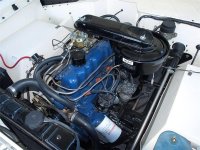
Code T- 200 CI Inline Six. These were brought into the EB world for the 73 model year as an improvement over the 170, and were used through the 74 model year. The six cylinder engine was completely discontinued after 74. The 200 was often swapped into 170 equipped Broncos as an upgrade. The way to easily tell them apart is that the 170 has 3 freeze plugs on the passenger side of the block, the 200 has 5.

Code G- 302 CI V8. The 302 replaced the 289 at the beginning of the 69 model year, and was used until the end of production. It was an optional upgrade until 75 when it became the standard engine due to the six cylinder being discontinued for EB production.

Code 6- Low Compression 170 CI Inline Six. These engines were designed to run on lower octane fuels outside the USA. Also referred to as the Export 170. The earliest known use of these are in late 66s that were sent to South America. They were used into the 67 model year, and although there is no certain documentation it is believed they were used in 68 models as well.

Code 7- Low Compression 302 CI V8. Just like the Export 170, these 302s were sent out of the country. As of now, the only year these were used for certain is the 1970 model year. It’s highly possible there are others out there that haven’t surfaced yet.
 

Attachments

  • IMG_9776.jpeg
    IMG_9776.jpeg
    184.6 KB · Views: 114
  • IMG_9777.jpeg
    IMG_9777.jpeg
    257.4 KB · Views: 110
  • IMG_9778.jpeg
    IMG_9778.jpeg
    28.9 KB · Views: 121
  • IMG_9779.jpeg
    IMG_9779.jpeg
    83.7 KB · Views: 126
OP
OP
JGbronc

JGbronc

Contributor
Bronco Maniac
Joined
Mar 30, 2007
Messages
6,387
Loc.
Hytop, Alabama
#broncobreakdown

The rare, the strange, and the controversial. ‘66 “Pony Interior” package!

So this topic has caused lots of controversy over the years. Many did not believe that this was a real package, and up until recently there was no actual proof. The non believers assumed this was dealer installed or custom.

It was noticed that some Broncos had appeared with the “Pony Interior” similar to what was offered in the Mustang. Some things started to add up over time and point more towards this being real. First, they were all late 66s, and most were 289 equipped. Then it was noted that these had the parchment dash and door panels, which was previously only known to exist for 67 and newer (all other 66s were gray). These also had the parchment vinyl full length floor mat, known to the Sport of later years.

Then very recently it was discovered by some Bronco enthusiasts that these Broncos actually had a different body code than the other 66s. A normal 66 wagon would have a 798 body code, while a Pony wagon would have 998. 998 was the body code used for 67 wagons with parchment interior.

These have surfaced in all three body types, U13 U14 and U15. However only two U13s with Pony Interior are known to exist! The 66 Pony U14 would have a 997 body code, and the 66 Pony U13 would be 996.

So by all the evidence, this was 100% a real factory option!
 

Attachments

  • IMG_9780.jpeg
    IMG_9780.jpeg
    88.9 KB · Views: 139
  • IMG_9781.jpeg
    IMG_9781.jpeg
    84.5 KB · Views: 149
  • IMG_9782.jpeg
    IMG_9782.jpeg
    52.3 KB · Views: 138
  • IMG_9783.jpeg
    IMG_9783.jpeg
    51.5 KB · Views: 142
  • IMG_9784.jpeg
    IMG_9784.jpeg
    59.1 KB · Views: 148
Last edited:
OP
OP
JGbronc

JGbronc

Contributor
Bronco Maniac
Joined
Mar 30, 2007
Messages
6,387
Loc.
Hytop, Alabama
#broncobreakdown
Side reflectors and marker lamps…

Here’s a brief description of what was there and what wasn’t. This is side only, rear will be covered later and front was covered with the grill article.

Pic 1- 66-67. No side markers or reflectors were used.

Pic 2- 68-69. Note the angular side reflectors mounted low on the body. These were reflectors only and weren’t illuminated. They were used all year 68 and 69.

Pic 3- 70-76. These rectangular lamps were added promptly for the 1970 model year. These were lighted, both front and rear. The ones in this picture are in the correct position, about midway in the body.

Pic 4- 77. The same rectangular lamps were used for 77, but the fuel doors were added for 77 so changes were necessary. The solution was to turn the rear markers vertical and add it to the taillight section rather than the quarter panel. As you can see, the old location would’ve interfered with the rear fuel door. This is what makes an original 77 easily recognizable.
 

Attachments

  • IMG_9785.jpeg
    IMG_9785.jpeg
    143.8 KB · Views: 156
  • IMG_9786.jpeg
    IMG_9786.jpeg
    143 KB · Views: 162
  • IMG_9787.jpeg
    IMG_9787.jpeg
    73.4 KB · Views: 174
  • IMG_9789.jpeg
    IMG_9789.jpeg
    123.6 KB · Views: 160
OP
OP
JGbronc

JGbronc

Contributor
Bronco Maniac
Joined
Mar 30, 2007
Messages
6,387
Loc.
Hytop, Alabama
#broncobreakdown

Super early 66 oddities!

So many of you already know that 66s have several unique differences, but it gets even more different in the first few weeks of production. I thought I’d share a few of these things.

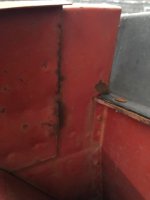
Pic 1- Short inner fender aprons. As you can see, the inner fender doesn’t extend as far back as normal. This was changed super early in production, seemingly within the first few weeks. It’s the same on both sides.

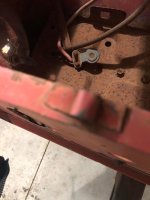
Pic 2- Extra panel on kick panel/inner fender. The angular panel you can see here is located on the passenger side kick panel, tying into the inner fender. This also disappears after the first few weeks of production, possibly after the first. This was only on the passenger side.

Pic 3- Mystery grommet. This was located on the inner driver side quarter panel, right behind the striker post support. It’s a total mystery what this was for, but it lasted just a tad longer than the items in the first two pics. It went away by mid September.

Pic 4- Core support loop. This possibly lasted into September but can’t confirm. These usually broke off, leaving just the edges welded to the core support. This was an early design location of the hood prop rod.
 

Attachments

  • IMG_9790.jpeg
    IMG_9790.jpeg
    62.1 KB · Views: 163
  • IMG_9791.jpeg
    IMG_9791.jpeg
    105 KB · Views: 155
  • IMG_9792.jpeg
    IMG_9792.jpeg
    46.5 KB · Views: 163
  • IMG_9793.jpeg
    IMG_9793.jpeg
    119.2 KB · Views: 164
Last edited:
OP
OP
JGbronc

JGbronc

Contributor
Bronco Maniac
Joined
Mar 30, 2007
Messages
6,387
Loc.
Hytop, Alabama
#broncobreakdown

Front and Rear reflectors!

Pic 1- These are the rear reflectors that were optional from 67-69. As you can see these are more oval shaped and taller than the later version.

Pic 2- This is an example of the 70-77 rear reflector. These are more angular, and smaller in size. The bright ring pictured here was added to them with trim packages. This beautiful survivor belongs to Jack Niederkorn.

Pic 3- Optional front reflectors. These amber reflectors positioned above the parking lamps were usually found on 68-69 Broncos, but have been noted to be seen as late as 70. These were an uncommon option, but they were ordered on Chad Larrance’s 69 Sport pictured here.
 

Attachments

  • IMG_9794.jpeg
    IMG_9794.jpeg
    191 KB · Views: 162
  • IMG_9795.jpeg
    IMG_9795.jpeg
    29.4 KB · Views: 161
  • IMG_9796.jpeg
    IMG_9796.jpeg
    93.2 KB · Views: 168
OP
OP
JGbronc

JGbronc

Contributor
Bronco Maniac
Joined
Mar 30, 2007
Messages
6,387
Loc.
Hytop, Alabama
#broncobreakdown
Tailgates, two of them specifically.

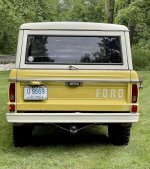
There were two different tailgates used. The first pic of the yellow Bronco is the 66-67 style. Contrary to popular belief these were used all year 67, or at least 95% of it. The top portion has just a slight level change that runs all the way across. This has recently been nicknamed the “waterfall tailgate”.

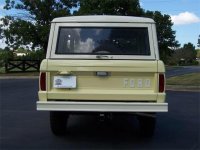
The second picture of just a tailgate is the 68-77 style. Notice the difference in the top portion, this one has a bead rather than the level change, and it stops short of the edges on both sides. Obviously these are much more common and the reproductions are patterned after these, making the earlier version valuable.
 

Attachments

  • IMG_9797.jpeg
    IMG_9797.jpeg
    67.8 KB · Views: 185
  • IMG_9798.jpeg
    IMG_9798.jpeg
    75.7 KB · Views: 176
OP
OP
JGbronc

JGbronc

Contributor
Bronco Maniac
Joined
Mar 30, 2007
Messages
6,387
Loc.
Hytop, Alabama
#broncobreakdown
Bulkheads!

A recent post in another group reminded me how much confusion and misinformation there is about these, so I’m bypassing the dash breakdown for this one.

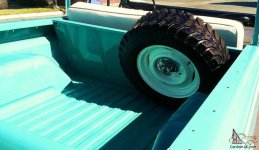
This panel behind the front seat or seats is what’s called a bulkhead. These were used from 66-72 in all models that didn’t come with a rear seat, including Roadsters and Wagons. They weren’t just for half cabs like many people assume, although the half cab top did bolt to the upper edge. One easy way to tell that a bulkhead wasn’t from an original U14 is that the upper edge won’t have holes for a half cab.

If your Bronco came with front buckets only or a bench front seat and was built before 73, it most likely had one.

As you can see in this pic, the spare tire was often mounted to them as well if tailgate mounts or swing away carrier wasn’t installed.
 

Attachments

  • IMG_9799.jpeg
    IMG_9799.jpeg
    126.1 KB · Views: 92
OP
OP
JGbronc

JGbronc

Contributor
Bronco Maniac
Joined
Mar 30, 2007
Messages
6,387
Loc.
Hytop, Alabama
#broncobreakdown

Dashes! Discussing panels, paint, and knobs! (Not including trim, clusters, etc)

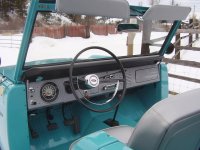
Pic 1: This is a 66 dash with wide speaker grill. Notice the cone shaped knobs with white insert, these are a one year only knob. The paint is called “Bronco Grey Poly”, also a one year only feature. All 66 dashes were this color unless it was a Pony Package. That would be Light Parchment. More to come on this later!

Pic 2: 67 dash, in Light Parchment. Same wide speaker grill as the 66 but the standard color is now Light Parchment. The 67 also had a one year only knob. See pic 3!

Pic 3: 67 only knob. From a distance, it looks the same as a 68+ knob, but as you can see it has an inset ring on the center piece and they are thicker.

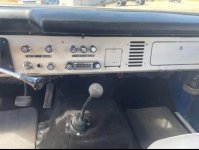
Pic 4: 68-72 dash. The speaker grill is now narrower. Knobs are changed to the style that remained for the rest of EB production. The ash tray moved more to the right. There was one difference in these years. The 68 and early 69 had a washer button below and to the right of the ignition. This became the location of the wiper switch when electric wipers were introduced mid 69. These were also Light Parchment in color.

Pic 5: Late 72-73 dash. New for late 72 were lighted indicator bars. The ignition moved back down. Notice this dash is body color. This is a new feature that was used on Rangers and Explorers only. The rest were Light Parchment. Note, the only Wimbledon White dashes were Rangers or Explorers with WW bodies!

Pic 6: 74-77 dash. Notice the missing hazard switch between the lights and wipers. It was moved to the column for 74 and remained there. Same with previous, Light Parchment paint unless it was a Ranger or Explorer.
 

Attachments

  • IMG_9800.jpeg
    IMG_9800.jpeg
    165.2 KB · Views: 168
  • IMG_9801.jpeg
    IMG_9801.jpeg
    85.6 KB · Views: 152
  • IMG_9802.jpeg
    IMG_9802.jpeg
    54.1 KB · Views: 160
  • IMG_9803.jpeg
    IMG_9803.jpeg
    79.8 KB · Views: 173
  • IMG_9804.jpeg
    IMG_9804.jpeg
    75 KB · Views: 148
  • IMG_9805.jpeg
    IMG_9805.jpeg
    61.3 KB · Views: 136
OP
OP
JGbronc

JGbronc

Contributor
Bronco Maniac
Joined
Mar 30, 2007
Messages
6,387
Loc.
Hytop, Alabama
#broncobreakdown

Front Axles!

***Text in pics from CB member***

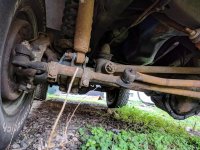
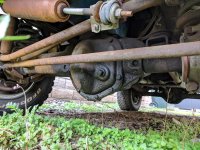
Contrary to popular belief, there were actually 3 different Dana axles installed on the EB, not counting differences in gear ratios and brakes.

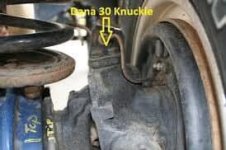
First off was the Dana 30, used from 66 until early 71. All of the Dana 30s had drum brakes. These don’t have a great reputation in an off-road environment, as the axle shafts are fairly weak. These were a kingpin axle, with a 4 bolt cap at the top of the pin on the knuckle. This and the more rounded shape of the center section make it identifiable as a Dana 30. Pic 1 is the center section shape, 2 is the king pin knuckle.

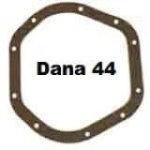
Second, the Dana 44. These were introduced late September of 1970 which was early in the 1971 model year. 71-75 were all drum brakes, 76-77 were standard with disc. These had stronger axle shafts than the 30, making it a popular swap for a 66-early 71. The Dana 44 is a ball joint axle, having a castle nut securing the top ball joint at the top of the knuckle. This and the more oblong shaped center section make these identifiable. Pic 3 is the center section shape, Pic 4 is the ball joint/castle nut.

Now for some mystery and confusion! Third is a Hybrid Dana 44 found in 69 and 70 Broncos. All with drum brakes. These are fairly rare and not used on all 69-70 applications. These were still kingpin axles, but featured the Dana 44 center section. One can assume these were a prototype for the upcoming Dana 44, but why ball joints were chosen over king pins is unknown. Pics 5 and 6 are examples of a Hybrid 44. Zoom in to see the 44 center and 30 style knuckle.
 

Attachments

  • IMG_9811.jpeg
    IMG_9811.jpeg
    275.3 KB · Views: 138
  • IMG_9810.jpeg
    IMG_9810.jpeg
    302.4 KB · Views: 135
  • IMG_9809.jpeg
    IMG_9809.jpeg
    49.7 KB · Views: 130
  • IMG_9808.jpeg
    IMG_9808.jpeg
    11.8 KB · Views: 126
  • IMG_9807.jpeg
    IMG_9807.jpeg
    26.2 KB · Views: 121
  • IMG_9806.jpeg
    IMG_9806.jpeg
    12.2 KB · Views: 137
OP
OP
JGbronc

JGbronc

Contributor
Bronco Maniac
Joined
Mar 30, 2007
Messages
6,387
Loc.
Hytop, Alabama
#broncobreakdown
Steering Wheels!

Here’s a little information about the original steering wheels and horn buttons/pads.

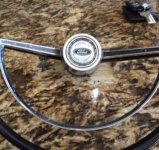
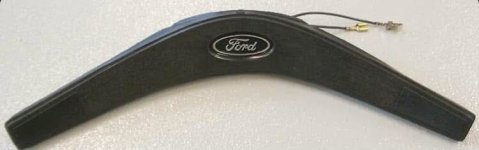
Pic 1- 66-late 74 steering wheel. This was the standard wheel used for the majority of Early Bronco production. It accepted a metal horn button, and that button could be ordered with a ring that extended out the sides and down into a semicircle. The rings are most commonly found in adjacent to a trim package.

Pic 2- 66 Horn button. This button has the previously mentioned horn ring. The finish for 66 was chrome, and 66 horn buttons were unique in that they said “Product Of….Motor Company” above and below the Ford oval logo in the center. These extra words were taken off for 67, but the buttons still retained the chrome finish.

Pic 3- 68-late 74 horn button. Sometime early in 68, the chrome finish was replaced with satin. As you can see, this is the plain button version without the ring. Much like the early speedometer, some early 68s have been noted to have the 67 style chrome button.

Pic 4- Stroppe padded steering wheel. This wheel is a stock 66-74 wheel with foam padding. These were sold by Stroppe and also installed in the Baja Bronco line.

Pic 5- Late 74-77 steering wheel. This wheel could be found on some super late 74s, but is also commonly called the 75-77 version. This design used a plastic horn pad insert with a rubber/plastic cover. This version usually didn’t survive well as they are notorious to develop severe cracks. Many F series trucks used these also.

Pic 6-Black horn pad. This is the most commonly used horn pad for late 74-77. These have a tendency to go missing over time.

Pic 7- Woodgrain horn pad. These were most commonly used on Rangers and 76 Explorers. There is always the possibility that the occasional wood grain pad was used in a base or Sport.
 

Attachments

  • IMG_9812.jpeg
    IMG_9812.jpeg
    66.8 KB · Views: 110
  • IMG_9813.jpeg
    IMG_9813.jpeg
    117.8 KB · Views: 88
  • IMG_9814.jpeg
    IMG_9814.jpeg
    24.1 KB · Views: 128
  • IMG_9815.jpeg
    IMG_9815.jpeg
    169.6 KB · Views: 109
  • IMG_9817.jpeg
    IMG_9817.jpeg
    28.7 KB · Views: 110
  • IMG_9816.jpeg
    IMG_9816.jpeg
    15.7 KB · Views: 110
  • IMG_9818.jpeg
    IMG_9818.jpeg
    35.9 KB · Views: 116
OP
OP
JGbronc

JGbronc

Contributor
Bronco Maniac
Joined
Mar 30, 2007
Messages
6,387
Loc.
Hytop, Alabama
#broncobreakdown
Grills, and all about them!

Here for a breakdown are the unmistakable Early Bronco grills. There were numerous configurations of them, and I’ll do as best I can to explain them all…

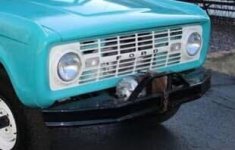
Pic 1: Early 66 “Eyebrow”. These were used only on early 66 Broncos that were built from August through most if not all of November. These are named after the lines above and below the headlight, which resemble eyebrows. These had Wimbledon White centers and black painted Ford letters. Small clear signal/parking lamp lenses that contrary to popular belief had clear bulbs also.

Pic 2: Close up of “eyebrows” for reference

Pic 3: Mid 66-68 base grill. Same as the previous grill except no more eyebrows. We assume this is from a tooling change of some sort. Perhaps it was easier to stamp without?

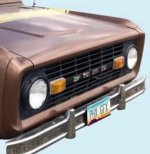
Pic 4: 67-68 Sport grill. The Sport package was introduced for 67, and with it was some extra bling. Note the chrome raised Ford letters which would have had red inserts in them, the Argent painted center, and the anodized aluminum ring around the center for an added touch.

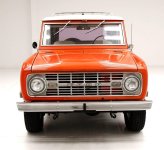
Pic 5: 69-77 base grill, also used for 73+ Explorer. For 69, new parking lamp/turn signals were introduced. They were much larger than the previous years, and now had an amber lens and thick gray gasket in between the housing and grill. Still painted Wimbledon White with black painted Ford lettering. Headlight adjuster holes were added in the headlight rings beginning in 71.

Pic 6: 69-77 Sport and 73-77 Ranger Grill. Just like the 67-68 Sport grill with Argent painted center, raised letters with red inserts, and trim ring, only the larger parking lamps are used. These were used on the 72 Explorer/Sport models as well, since they received all the bright work. Same headlight ring change in 71.

Pic 7: 76-77 Special Decor base grill. When the Special decor package was introduced for 76, it brought something new. A matte black painted grill center! These usually featured chrome raised letters with red inserts, with or without Sport package. One thing to note, the front of the core supports were usually painted black on these as well.

Pic 8: 76-77 Special Decor Sport grill. The Sport package was still an option to go along with the Special Decor Group. Therefore all the bright work was added which included the trim for the grill center.

This basically covers the grills themselves. More to come, stay tuned!
 

Attachments

  • IMG_9826.jpeg
    IMG_9826.jpeg
    47.9 KB · Views: 174
  • IMG_9825.jpeg
    IMG_9825.jpeg
    31.6 KB · Views: 156
  • IMG_9824.jpeg
    IMG_9824.jpeg
    21.8 KB · Views: 156
  • IMG_9823.jpeg
    IMG_9823.jpeg
    57.5 KB · Views: 136
  • IMG_9822.jpeg
    IMG_9822.jpeg
    190.6 KB · Views: 143
  • IMG_9821.jpeg
    IMG_9821.jpeg
    25 KB · Views: 145
  • IMG_9820.jpeg
    IMG_9820.jpeg
    146.9 KB · Views: 141
  • IMG_9819.jpeg
    IMG_9819.jpeg
    57.9 KB · Views: 168
Last edited:
OP
OP
JGbronc

JGbronc

Contributor
Bronco Maniac
Joined
Mar 30, 2007
Messages
6,387
Loc.
Hytop, Alabama
#broncobreakdown
“Bodyside Molding”
“Belt-line Trim”
“Side Chrome”

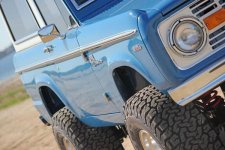
It can be called a lot of things, but one thing it certainly isn’t is “Sport Trim”.

It’s a common misconception that this trim was limited to the Sport or Ranger. I can’t blame this one on the internet, as the rumor was around long before the web. But the fact is, it was an option on all 67-77 Broncos that were equipped with hard doors. This included base models.

During the early years it was less common to see it on a base model but it was always an option. When I say always an option, I mean it was also common to see a Sport, Ranger, or Explorer without the trim as well.

I hope you all are enjoying these tidbits. I can be a little OCD about details, and I wanted to share them to hopefully help others learn about these and be able to confidently say things.
 

Attachments

  • IMG_9827.jpeg
    IMG_9827.jpeg
    34.5 KB · Views: 113
  • IMG_9828.jpeg
    IMG_9828.jpeg
    71.2 KB · Views: 94
  • IMG_9829.jpeg
    IMG_9829.jpeg
    110.4 KB · Views: 124
Top